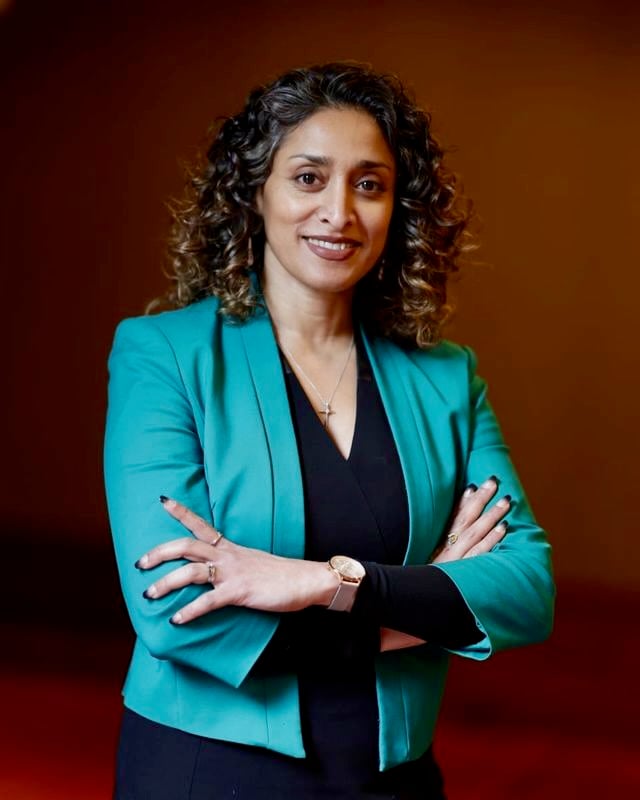
by Monisha Gower
Networks Director, SSEN Distribution
The energy and infrastructure sectors are full of skilled people who solve problems, challenge assumptions, and create solutions. They do this every single day, and the need for them has never been more acute.
Electricity Distribution Network Operators (DNOs) like Scottish and Southern Electricity Networks are preparing business plans for the forthcoming ED3 price control period, and we’re doing this at a complex, challenging time.
First – the big picture.
Electricity is powering ever-more journeys, workplaces, homes and businesses, and networks need to meet this growing demand. Other system players – like gas distribution networks – will continue to play key roles in powering communities, transport and industry for some time to come.
Keeping costs in check while transforming the energy system
This transition is happening when affordability is a real concern for customers.
Their bills are rising, as ongoing geopolitical uncertainty pushes the wholesale cost of energy up.
Meanwhile, surging labour, raw material, and component costs make the bottom line for expanding the network more expensive.
But, as is so often the case, challenging circumstances yield opportunity.
This is because the solution is not simply to build out the network. It also lies in making better use of what we already have, removing unnecessary barriers, and finding smarter ways of meeting growing demand.
And that’s where these critical, enquiring, creative minds – which let’s remember, are already developing answers to challenges – will come ever more into play.
Because for all the good work already being done - and you only need to look at our own innovation portfolio for a ready body of evidence - a step change is needed.
A time for pushing boundaries, and challenging assumptions
To make the required progress, we’ll need to push boundaries, challenge long-standing assumptions, and break through some of the constraints that define how we work currently.
To give accountability and structure to this task, the energy industry’s Innovation Taskforce is setting up a series of Delivery Groups. These will drive forward progress in finding solutions to some of the most pressing challenges we face.
Each group is focused on a specific test facing the sector, ranging from eliminating power outages to accelerating the construction and maintenance of network infrastructure.
The group I chair is tasked with delivering a massive reduction in the time it takes networks to connect new industries and businesses. The expert who’ll co-lead this group with me is Dr Angela Needle, who’s the Director of Strategy for the gas network operator Cadent. This sharing of responsibility between people from differing backgrounds underlines the need for individuals with the broadest hinterlands to come together in common cause to solve our challenges.
Our challenge - connecting clean industry more quickly
Our particular objective is a stretching one; by 2033, we want major new strategic industrial sites to be energised and operational within six months of a connections request being submitted.
A look at the current position reinforces how ambitious this is; right now, this type of connection can take years. The length of this wait creates a very real disconnect between the time when customers, developers, investors or regions want to set up shop, and the point at which the energy infrastructure is ready to support them.
Thus, a networks challenge becomes an economic growth issue, and a potential blocker to decarbonisation.
The Innovation Delivery Group I chair will help shape the direction needed to find solutions.
Now our work is underway, we’re developing an Innovation Charter that’s setting out the routes, priorities and innovation opportunities that will most likely deliver progress.
We know we’ll be making headway if we overcome the barriers that serve as current blockers, build successfully on what already exists, avoid duplication, and give the sector a clearer view of where innovation can make the biggest difference.
This will be no mean feat, which is why we've deliberately brought together people with very different perspectives.
Networks grasp the realities of today's system and the practical challenges of delivery. Customers and trade bodies understand the consequences when connections take too long. Government and regulators shape the framework within which we operate. And supply chain and technical specialists bring the vision for what might be possible, if we park our preconceptions and just manage to think differently.
No single organisation has all the answers. If we're going to make meaningful progress, we need to combine expertise from across the sector and focus on problem-solving as one.
Our group's first meeting is now successfully under our belt. The vibe around the virtual table was open, constructive and ambitious about what could be achieved.
As we shape our Innovation Charter, a number of important questions are emerging:
-
Where are the biggest barriers to faster industrial and business connections?
-
Which barriers require innovation, and which need wider changes in policy, regulation or operating models?
-
What can be achieved through existing activity, and where is broader sector action required?
These are challenging questions, and we don't have the answers yet. But we do have a clearer sense of where our efforts will need to be focused, if we're going to create the conditions for the right solutions to emerge.
Every member should feel able to challenge constructively if something doesn’t feel deliverable, credible or ambitious enough. And I want to build a strong spirit of collaboration, because the best solutions won’t come from a single organisation or a single discipline. Instead, I fully expect they’ll emerge when people share perspectives openly, challenge each other's thinking and focus on what the whole system needs.
Through this, I really hope we can find genuine innovation — not just incremental improvement around the edges. We must be willing to push boundaries, challenge long-standing assumptions, and move beyond some of the ways we've previously planned, connected, and delivered energy capacity.
This is a once-in-a-generation opportunity to change the landscape and ways of working across the sector. If we do our job, the outcome won’t be another report sitting on a shelf. Instead, we’ll have helped deliver practical changes to support economic growth, accelerate decarbonisation and improve the experience of customers who want to build and invest, right here at home.
If you want to share your ideas with us, get in touch with us at the SSEN Innovation website.
Click here for more information on UKRI’s work and approach in the field of innovation.