-
Almost £350,000 has been awarded to successful applicants in the 2025 round of our Powering Communities to Net Zero fund.
-
A total of 25 projects across the Highlands, Western Isles, Argyll, Perthshire, Angus, Aberdeen City, Shetland and Aberdeenshire are receiving grants.
-
Successful projects include the installation of heat pumps and solar panels at community hubs, the purchase of pavement gritters, and flood-protection equipment.
A total of almost £350,000 in grant funding has been awarded to not-for-profit community groups in our north of Scotland licence area in the 2025 round of our Powering Communities to Net Zero fund.
The Aims of the Fund
The fund has two aims; firstly, to support groups who are looking to cut the carbon from their activities through the adoption of solar panels, battery storage, EV chargers and heat pumps. And it also seeks to help communities become better prepared ahead of severe weather which may affect the local electricity network and cause the power to go off or have other impacts.
2025's successful applicants
2025’s successful applications in the north of Scotland include requests to fund the installation of solar panels in village halls, heat pumps in community centres, an emergency exercise training session, and neighbourhood pavement gritters.
A total of 10 low carbon technology and 15 resilience projects are being funded in the 2025 round in the north of Scotland, with values of £189,000 and £160,000 respectively.
Click here for the full list of grant recipients in the north of Scotland
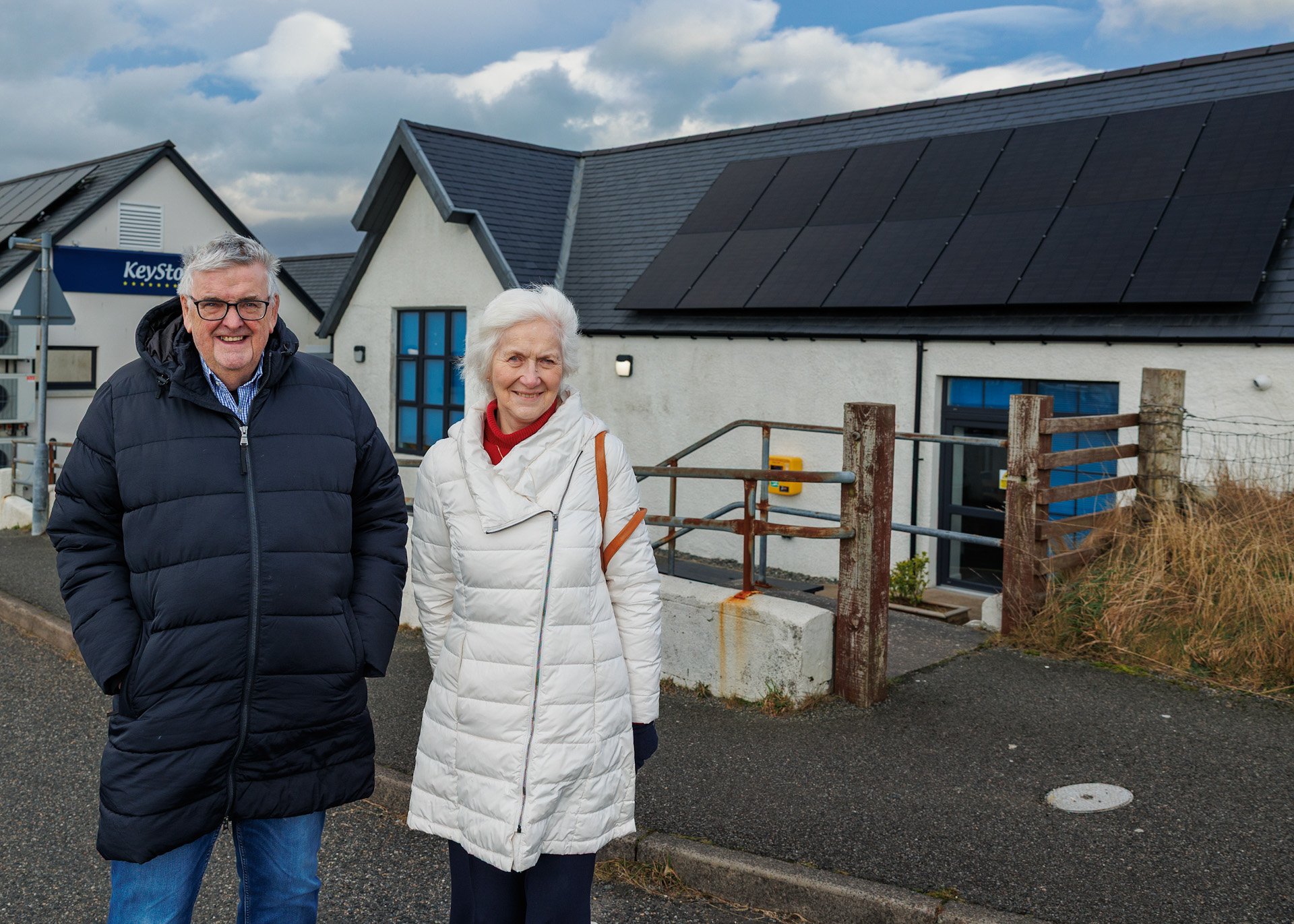
ABOVE: Norman MacKenzie from Point and Sandwick Trust, and Catriona Dunn from Urras Stòras An Rubha at the Aros an Rubha Hub. The local community it's at the heart of has benefitted from SSEN community funding. (Credit: SandiePhotos)
SSEN Distribution’s Services Director, Eliane Algaard, says:
“I’m really heartened to see groups across the north of Scotland submitting excellent applications to fund schemes that’ll deliver meaningful benefits to their local communities.
“The variety of applications received has once again been particularly impressive. Whether they’re taking the initiative by making plans to be better prepared ahead of severe weather or are investing to cut the carbon emissions from their day-to-day activities, all the communities who submitted applications are to be commended.
“We’re proud to be supporting the ambitions of those successful applicants, and we wish them well as they now work to move their projects forward.”