
by Fraser Macintryre
Future Networks Project Manager
SSEN Distribution
How do we know how an electricity network is operating?
The data the system itself yields provides the answer. This information is an ever-more prized, and valuable commodity, as decarbonisation of the electricity system continues.
"As custodians of this information – about where and when power’s being used, and how much of it is being consumed in our licence areas – Scottish and Southern Electricity Networks is at the forefront of opening up access to this data, and responsibly sharing the insights it offers."
This summer, our data-sharing offer is completing its transition to being a fully-embedded part of our business-as-usual activities. It’s now at the very heart of our approach to digitalisation, transparency, and how we help our customers realise their plans.
At the heart of our data offering is what we call NeRDA.
A niche acronym perhaps - but the Near Real-Time Data Access it enables has widespread uses. NeRDA is centred around the principle that the provision of near real-time operational data – rather than static snapshots – better informs those making decisions about the development and use of the electricity system.
So, what goes into NeRDA’s insights that makes them so useful?
The portal now shares real-time data from nearly 9 thousand smaller substations on our networks, and gives access to around 8 million specific data indicators. These – and other insights – have become must-see information for a broad range of users. We now have more than 1,500 of them registered, ranging from infrastructure operators and planners at local authorities, to consultants and providers of digital solutions.
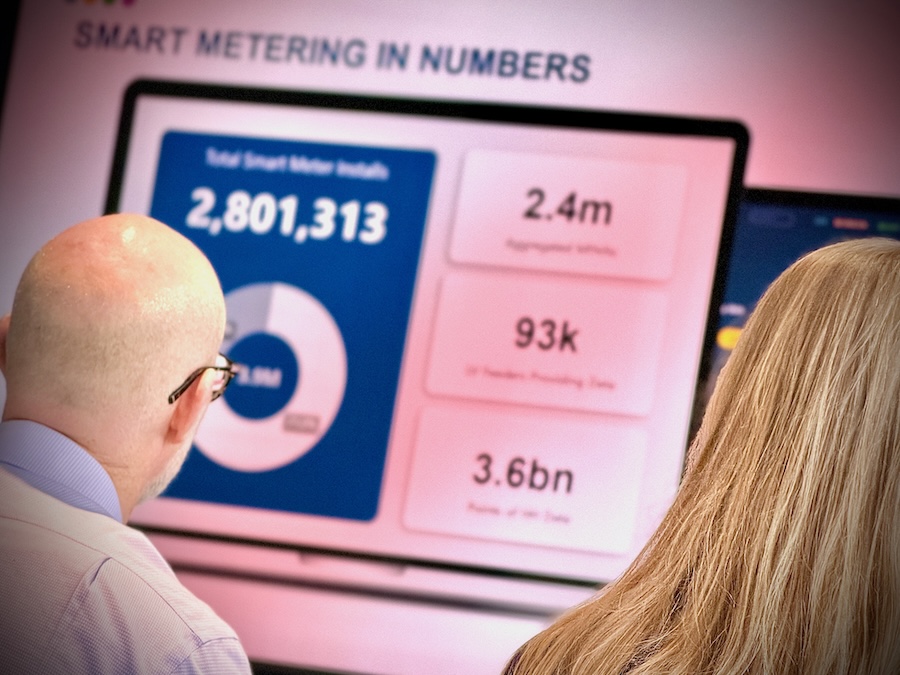
And they’re coming to us because of what they can uncover from the information NeRDA provides. They can find near real-time network utilisation data at all network levels, be it extra-high, high, or low voltage. They can observe loading, demand and capacity information relating to substations. Network configuration and topology datasets can be scrutinised, and so can static data. And we’ve worked really hard to present all this complex information in a clear and easily-searchable, and also available in machine-readable formats.
"What marks NeRDA out is how it makes near real-time network data openly accessible to low-voltage level, offering useful insights right down to local areas. These tell us really important things about how, when, and in what quantities power is used by end users in homes and businesses in specific neighbourhoods."
The richness of the feedback we’ve received from users thus far has allowed us to hone how the portal works, to ensure it’s focused on solving real-world customer challenges. As we bring NeRDA fully into our business-as-usual activities, the benefits for our customers will only increase.
"We’ll enable faster connections decisions, because users can check available capacity before they put in an application. We’ll empower more developers and local authorities to make better calls on investments, by helping them see where the network has the ready capacity to support their plans. And we’ll cut their costs, by limiting uncertainty, and providing confidence for them to move forward with proposals."
Taken together, all this will propel the move to decarbonise our communities and the economy, by unlocking the accelerated development of low-carbon transport, housing, and commerce.
WATCH: Highlights and perspectives from our recent Data Showcase event
This process will take a big step forward during the forthcoming ED3 price control period, which will run for five years from Spring 2028. The scope of network operators in driving decarbonisation will likely broaden, customer expectations of what the network will deliver on their behalf will increase, and the expectation for us to deliver an even better, more capacious network efficiently and affordably will rightly prevail. In this context, the benefits the data insights we’re now able to provide become even more valuable.