Contact us
If you have any questions or would like more information about the Holm to Burray project, please contact:
submarinecables@ssen.co.uk
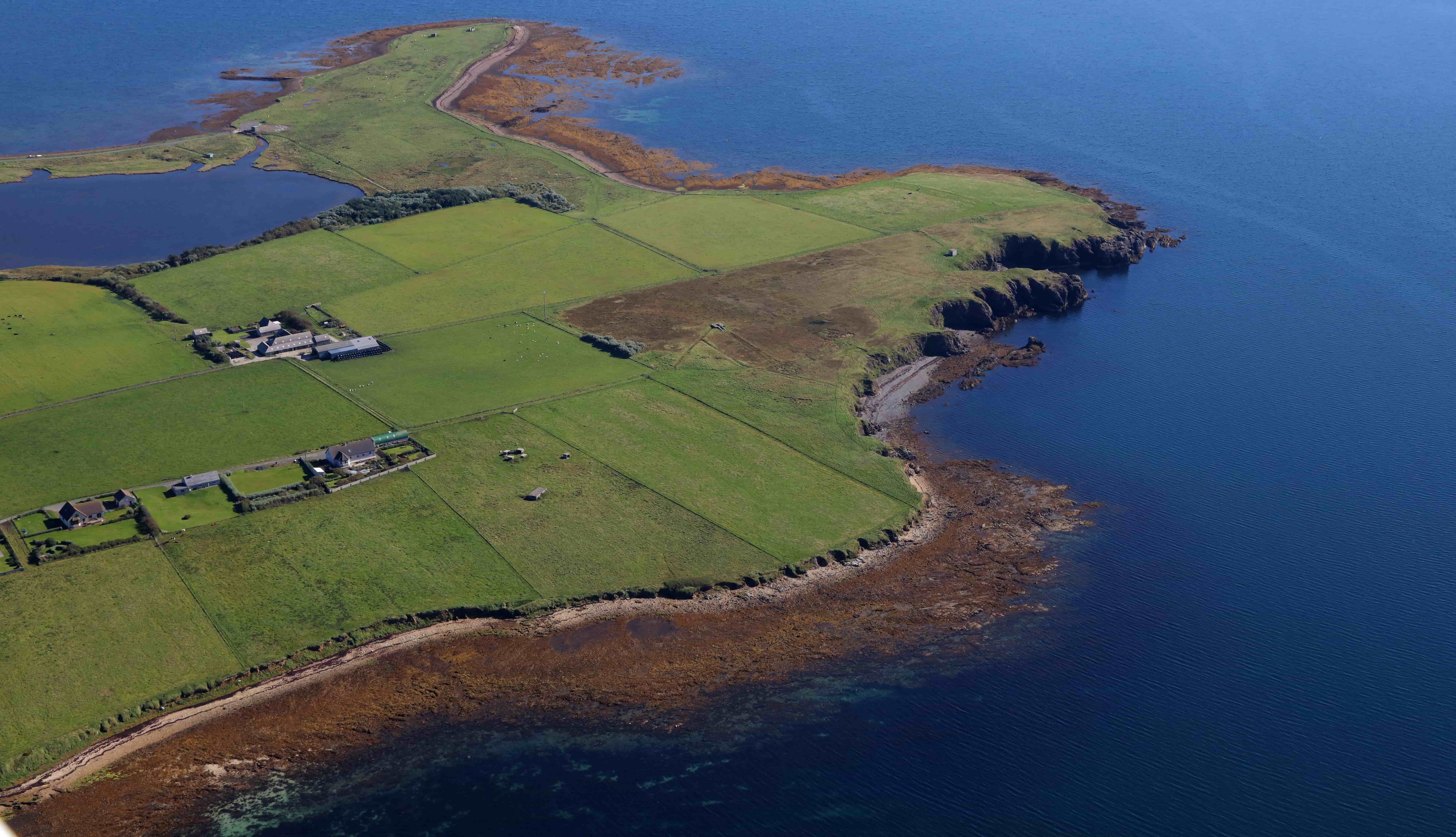
The Scapa Flow is a significant body of water from a historical perspective as it was a strategic naval base during both World Wars and is also an essential habitat for a wide variety of marine species.
This stretch of seabed between Holm on Mainland Orkney and Burray on South Ronaldsay, provides a critical link to upgrade and enhance the reliability of power supply to Burray and the Isle of South Ronaldsay. The project aligns within our commitment to continue improving power resilience across the Scottish Islands.
What is involved in the cable installation project?
- Design, procurement, and cable lay of two 33kV subsea cables between Holm and Burray, including associated shore end works.
- Carrying out survey and engineering works to ensure the seabed route is suitable and to avoid environmental sensitivities.
- Creation of transition joint bays, cable landings, and connection into the existing network infrastructure at both ends of the cable.
Why is the cable installation needed?
- We are committed to ensuring network security and creating an alternative supply will protect the island communities form unplanned outages
- To increase network capability in order to support future load growth and support the Islands growing demand and providing greater security of supply
- To reduce the risk of power outages due to damaged or deteriorating assets, such as older subsea cables.
What are the benefits?
- Enhanced reliability: Less risk of supply interruptions for homes, businesses, and critical infrastructure on Burray.
- Future proofing the network: The new cable will support increased capacity and demand over coming decades.
- Minimal disruption: Works to the seabed and shore will aim to avoid disruption to marine users. Shore-works will be planned in phases to maintain supply.
- Environmental stewardship: Use of best practice in marine ecology, working with stakeholders such as NatureScot, local fishery groups, and others to minimise impact to seabed habitats, marine life, and coastal areas.
What will be the environmental impact of the project?
- Our specialist Marine Consents team carry out comprehensive environmental surveys (benthic, fish, marine mammals) prior to any cable laying to ensure we avoid disturbing marine habitats.
- The data from the surveys inform our chosen route to avoid sensitive habitats and protected areas wherever feasible.
- Cable laying methodology (e.g. burial, seabed trenching) will be selected to minimise disturbance.
What impact will this have on local communities?
- Local residents and businesses will be kept informed with regular updates during planning and construction, including locally held Pre Application Consultation events.
- Some shore-working and marine operations may require temporary access restrictions or localised impacts, which will be carefully managed.
- The installation will strengthen long-term energy security for Burray.
- On the completion of works, our project site will be cleared of equipment and reinstated to the condition it was found.
Project timeline & next steps
- Planning & design phase: 2025–2026, including route surveys, environmental assessments, and obtaining statutory consents.
- Procurement & mobilisation: expected in late 2026.
- Construction and cable laying: targeting summer 2027 for marine works, with shore-end works coordinated to limit disruption.
- Commissioning and operation planned by the end of 2027, subject to regulatory approvals.